

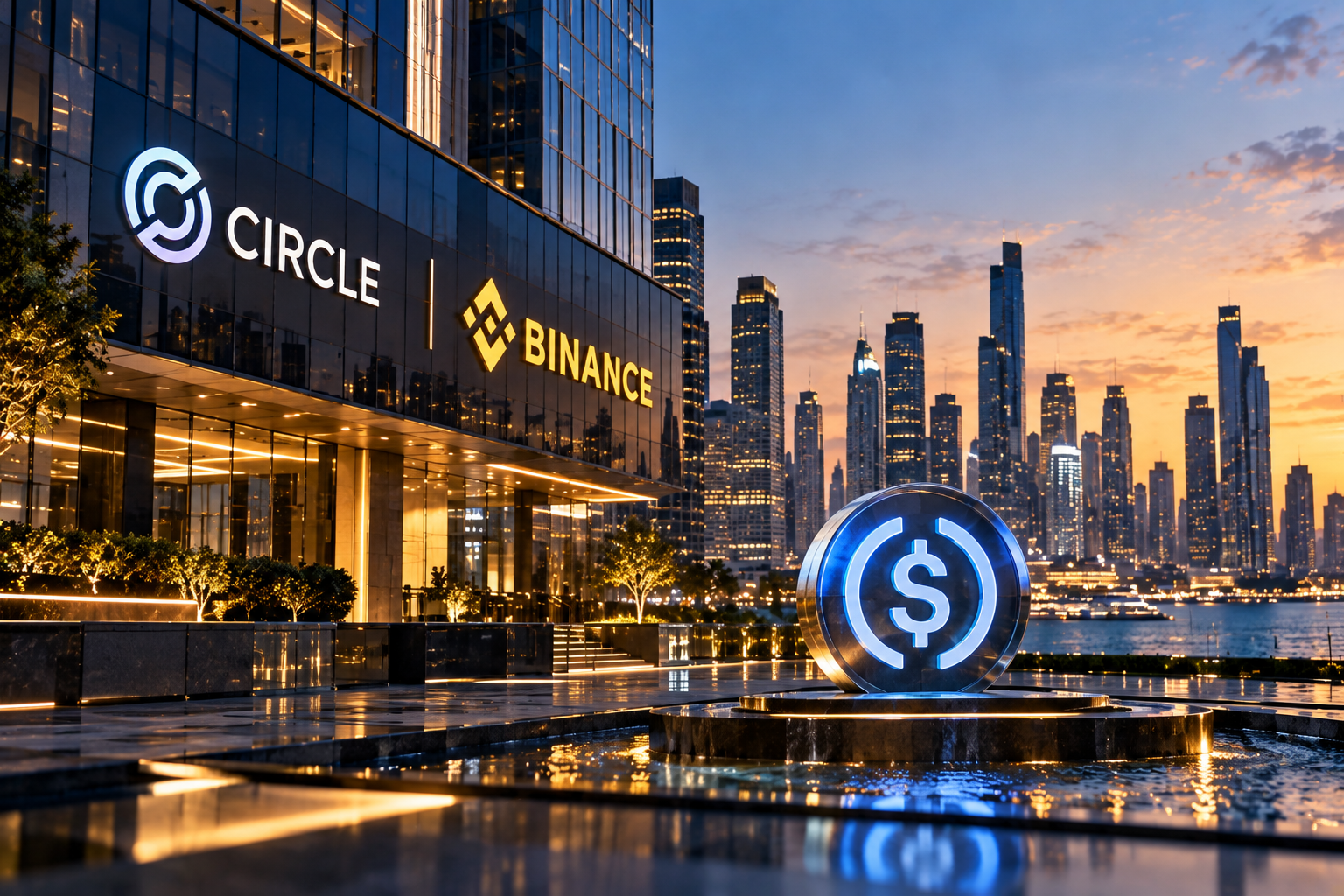
Circle and Binance have expanded their commercial relationship around USDC through a new five year agreement.
Binance has also made a $100 million strategic equity investment in Circle.
Under the agreement, Binance will increase the promotion and integration of USDC across its platform, with a particular focus on emerging markets. Circle will provide infrastructure supporting the holding and use of USDC.
The transaction puts two different parts of the stablecoin model next to each other.
Circle controls issuance and the institutional infrastructure surrounding USDC. Binance contributes distribution, wallets, trading activity and access to a large international user base.
That combination matters because stablecoin scale is not determined by issuance alone.
A stablecoin can have credible reserves, redemption and regulatory infrastructure while still lacking deep distribution in the places where businesses and users need to move money. Distribution can also exist without a trusted issuer and reliable access to primary liquidity.
The harder problem is connecting the two.
For institutional use, that connection extends beyond having a USDC balance available inside an application. A useful stablecoin network requires liquidity, conversion routes, local banking connectivity, compliance controls and a reliable path between the token and the currencies in which users ultimately receive or spend money.
The five year structure gives the two companies time to build those flows. The $100 million investment also aligns the commercial relationship more closely than a standard integration agreement.
It does not, however, demonstrate future transaction activity by itself.
That evidence needs to come from usage.
What to watch
The relevant metrics are not partnership announcements.
They are USDC balances, transaction activity, conversion flows and the extent to which USDC becomes part of recurring payments or treasury activity in the markets targeted by the agreement.
The partnership gives USDC additional distribution capacity. Whether that becomes durable financial infrastructure will depend on what users and institutions actually do with that access.