

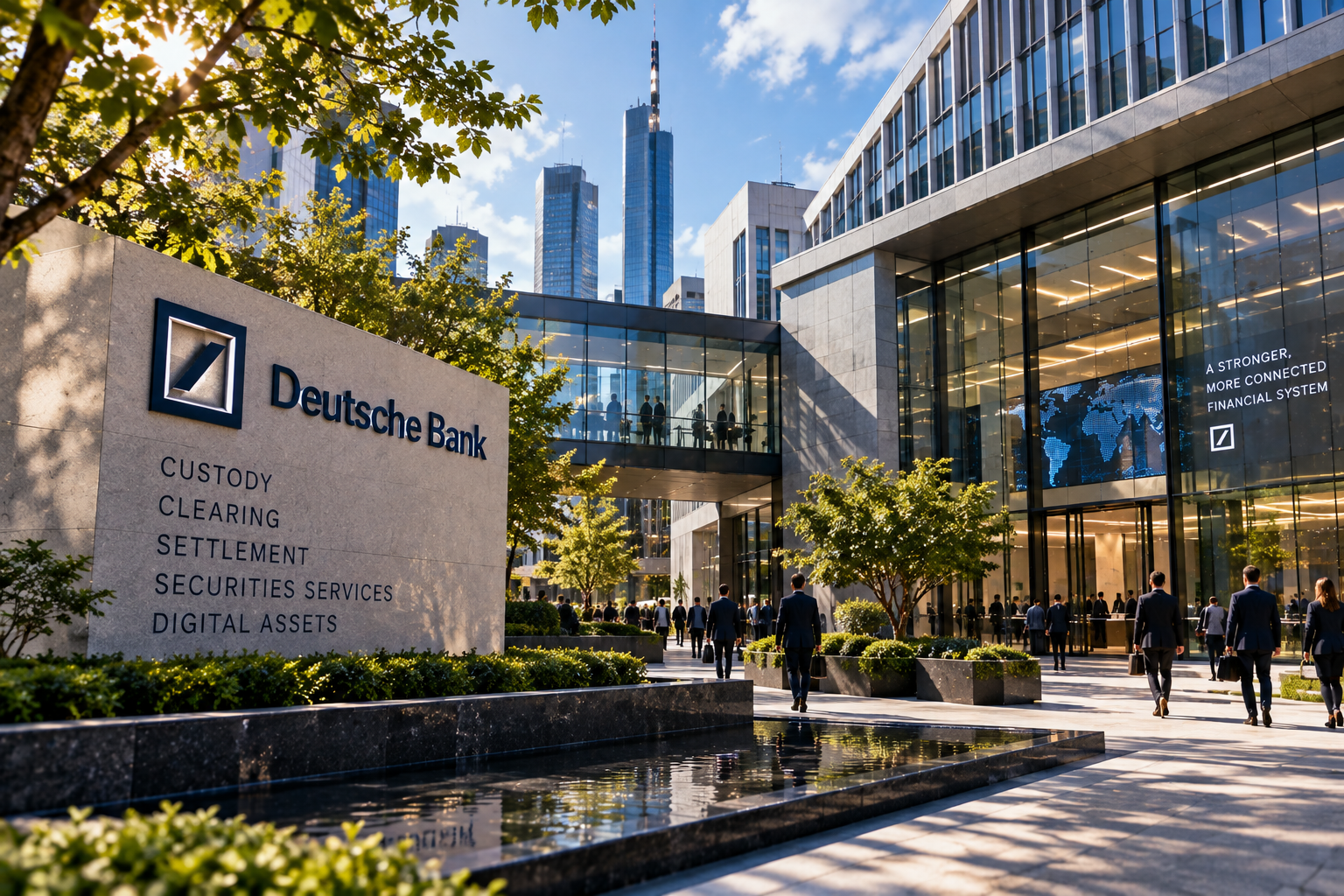
Deutsche Bank plans to launch a digital asset custody service for institutional and corporate clients in Europe during 2026, subject to completion of the applicable regulatory process.
The initial service is expected to support Bitcoin, Ether and selected stablecoins or e money tokens including USDC, EURC and EURAU. Tokenized financial instruments are also included in the longer term roadmap.
Deutsche Bank will manage wallets and private keys on behalf of clients and says the infrastructure includes hardware based key protection, segregation of duties, multi person approvals, separate warm and cold storage environments, backup and recovery arrangements and selected external technology providers.
The list of controls is more important than the asset list.
Institutional custody is often described as a security problem around private keys.
That is only one component.
A bank also needs to determine who can instruct a transfer, who approves it, how responsibilities are separated, how access is recovered, how client assets are identified and how the institution proves what happened after an event.
Those are operating model questions.
Deutsche Bank’s approach reflects that wider structure.
The service is also being positioned inside the Corporate Bank and Investment Bank client base rather than as a retail crypto product. The initial target population includes corporates, asset managers, hedge funds, custodians, brokers and sovereign institutions.
That gives the custody platform another potential role.
Once an institution can hold digital assets inside a regulated banking relationship, custody can become an entry point to settlement, collateral, payments and tokenized financial instruments.
That broader workflow is not available at launch simply because the custody layer exists.
But without custody and control, those other services are difficult to build.
What to watch
The first milestone is regulatory completion and onboarding of live clients.
After that, the relevant question is whether custody remains a standalone service or begins connecting to Deutsche Bank’s wider securities, cash and transaction banking infrastructure.
The bank has described digital assets as additional financial rails rather than a replacement for existing infrastructure.
Its own product development will provide a practical test of that position.